Monday, December 31, 2007

Trailer for Tobias Buckell's Sly Mongoose

Tobias Buckell (Crystal Rain and Ragamuffin) has created a video trailer for his third book, Sly Mongoose, and asked fans to suggest various musical scores to go with it. Below is the result, which I'm still excited to see, even though we'll have to wait until August for the actual book.


I see that smile.

Sunday, December 30, 2007

Werewolf boy?

Yet another example of a story element leaping into real life in a startling way. The concept of a child raised by wolves or other animals seems to come from the oldest tales, from Romulus and Remus in the foundation of the Roman empire, to the Jungle Book. These tales show how humanity might learn and gain from animalkind, often acquiring their skills and traits and using them to triumph over "civilized" men who only come to pillage nature.

But there doesn't seem to be a happy moral in this story, though it remains fascinating.

This 'werewolf boy' was found with a pack of wolves in a remote forest in Russia and brought into a center for medical examination and treatment. His behavior was described as "typical wolf-like habits," including running with the wolves, snarling and biting, foraging for food, and the nails on his feet being like claws.

What astounds me is that this boy managed to evade security at the clinic, and escaped back into the wild. So far there is no news of his being recovered. It also amazed me that he'd survived for so long, and that the wolves accepted him in the first place. What kind of dynamic was involved there? How long did he live among them? All his life? Is there any potential for developing human habits and traits within him, or has his upbringing been so cemented that he will forever consider himself a creature of the wild? Is humanity as frightening to him as we might be to the animals?

If you were to take this boy and try to write a story about him, what perspective would you tell it from? The boy himself? A nurse trying to treat him? How about the wolves he ran with? What would his story be? One of survival? Of family?

What's his story?


I see that smile.

Saturday, December 29, 2007

Get your "I am a real writer" certificate

If you've ever had a identity crisis as a writer, or perhaps lacked confidence in yourself after receiving the latest rejection of your work, here's the perfect way to start off the new year.

The Official Real Writer Certificate.

Even writers who have sold stories and novels sometimes doubt that they are, in fact, real writers. There hasn't been some formal notification that arrives in the mail, either from God or the government. So this person created their own validation, and decided to make it publicly available.

I like the one and only requirement: You must first say aloud, "I am a real writer."

And then away we go. Get this diploma matted, framed and hanging pretty over your desk.

It does make me wonder. At what point do you/would you consider yourself a real writer? What does that term even mean? Anyone can be a writer if they put their mind to it, but when we say this, do we mean someone who has achieved paid publication of a story? A novelist? A repeated novelist?

What is the unspoken goal line in your head that would make/has made you feel like a "real writer"? Or is there one at all?


I see that smile.

Friday, December 28, 2007

Woman fired for writing at work

A Sioux Center woman has been fired a job at an industrial equipment manufacturer for working on a romance novel on company time.

What lessons can we take away from this? First, let me say that while I'm all for squeezing time into a busy schedule to write, unless you and your boss have an agreement concerning writing during work hours, you shouldn't be surprised when they hand you the pink slip if they sneak up on your cubicle while you're doing 140 wpm on the keyboard. (I have seen some authors who do work out an arrangement. They have a part or full-time job that allows them to write during down time and slow periods, so long as they maintain productivity levels.)

It also might not be a good idea, during the job interview, to ask what the company's policy is on furthering your writing career on business hours--especially if your job is something like air traffic controller, or a security guard. Typing away might be a bit distracting during some crucial points during the day.

Throughout my various employments, I tend to take my lunch hours and set them aside for writing. I'm on my own time then, and I can get away from the desk and let my head clear for a little bit. Sometimes I head out of the building and walk around while talking through plot points, and, yes, I consider that part of the writing process.

The woman in this article did challenge the firing, saying she was just honing her skills during slow periods at work. I think any business appreciates employees trying to improve their work value, but when you work at an industrial equipment manufacturer, literary props aren't going to help much, methinks. Anyone disagree? Think she should've been given unemployment benefits?

I guess it could've been worse. She could have been trying to pull off a Devil Wears Prada scheme and expose how awful her boss was. The question is, how is she going to explain her getting fired while applying for her next job?


I see that smile.

Thursday, December 27, 2007

Shimmer magazine anthology

Holidays and vacations, while they can be hectic at times, are also good for refueling your creativity, giving you all sorts of ideas as they bubble to the surface, as well as vivid characters (who may or may not be based upon certain relatives you see once a year). So if you are coming back with a renewed urge to write, here's a new anthology you could consider working towards:

The Clockwork Jungle Book

"Think “Steampunk Fables.” We’re looking to explore the steampunk sub-genre through a series of short, succinct fables, preferably using a variety of animals to give the issue a particular feel and theme."

Sounds unique and fun. Should be a good challenge.

Shimmer also happens to be the magazine my story, Even Songbirds are Kept in Cages, is appearing in, with their next issue.

I hope this whets your writing appetite, as I know Christmas tends to be a lull with all the vacation craziness, running around, food that bogs you down on the couch and all the other homey distractions.


I see that smile.

Wednesday, December 26, 2007

And we're back

Home again to a cat who can't comprehend where we went for the past few days, or why strange people came by to fill his water and food bowl.

A wonderful Christmas was had by all, and I hope yours was too. While hanging with the family, they introduced us to the YouTube videos of ventriloquist Jeff Dunham, who I decided was hilarious enough to warrant a plug on this blog. Below is the first of three videos Dunham performs with a character named Peanut (warning: language), which we cracked up over. Enjoy, for a little post-Christmas giddiness.


His other puppets include Walter, Achmed (the dead terrorist), and Jose, the jalapeno on a stick. Enjoy.


I see that smile.

Tuesday, December 25, 2007

Merry Christmas!


Whatever your traditions and beliefs, I wish everyone a wonderful and restful holiday. The year is almost over, so let's make the best of these last few days.


I see that smile.

Monday, December 24, 2007

Operation Christmas

I've seen the article where someone figures out all the physics behind Santa delivering presents across the world in one night, but this new model offers a more business/manufacturing perspective. And it looks like someone got a hold of Santa's day planner as well.

Unwrapping the Miraculous Logistics Behind Operation Christmas

So, Santa is replacing Big Brother? That "knows when you've been sleeping" bit has always creeped me out a little. The "Funding" portion is nicely ironic. In fact, for all the conspiracy theorists out there, isn't the whole Santa coming into our homes, monitoring our every action and dispensing rewards or punishment a little...Orwellian? And we're teaching kids to enjoy this kind of system hanging over their heads?

Next thing you know, Santa is going to become the spokesperson for government-produced personal GPS trackers and microchip implants.

Ho ho ho.


I see that smile.

Saturday, December 22, 2007

We're off!

The wife, dog and I are taking a rental car to Maryland for Christmas. Blog posting may be sporadic until we return.

Let me at least leave you with this:

Combining both faux-fur and Christmas fashion, this coat will definitely make you stand out in the usual holiday last-minute shopping crowd.


Though I can't promise it will be in a good way.


I see that smile.

Friday, December 21, 2007

Science of the Christmas Spirit

Okay, so maybe this isn't exactly "Christmas Spirit." But what holiday season doesn't go by where someone doesn't either warn you about or tell the story of someone who licked a frozen flagpole and got their tongue stuck to it?

Since I've never had the nerve (or maybe the stupidity) to test this out for myself, I have wondered if this is actually possible, or just another urban legend. (And if you want to consider this as "research" for having a character do this in a novel, go for it...whatever rationalizes a writing connection)

This report says: Nope. It's real. Do it, and you'll be looking as stupid as you feel. Basically, the metal pole takes away the body heat in your tongue much faster than it can be replenished, and so you are stuck there until you either tear off that lovely bit of flesh, or have someone pour warm water over the contact point.

There. Aren't you glad I spared you the embarrassment? Now get out there and start triple-dog daring folks...though I wouldn't recommend the younger cousins at the family Christmas party. That might make for some unhappy relatives.


I see that smile.

Thursday, December 20, 2007

Free Rice

I realize I'm a little behind the times in pointing to this website. I heard about it a week or two ago and never got around to actually taking a look at it. But I'm glad I did.

http://www.freerice.com

The object is simple. You get a word. You try to select the correct definition. If you get it right, 20 grains of rice are donated through the U.N. to end world hunger. You get another word right...more rice gets donated. Fortunately, getting a definition wrong doesn't take rice away.

At this point, they've donated more than 10 billion grains of rice. Not sure how big of a pile that is, but I sure wouldn't want to be buried under it.

It's educational. It's a game. It's a small way to help feed those in need.

So. Free rice. Go play.


I see that smile.

Wednesday, December 19, 2007

Peter Jackson to produce The Hobbit

First we get to hear that Robert Jordan's last book has found its author, and now, another bit of news some of us have wondered about for a few years now:

Peter Jackson will be producing The Hobbit.

I know there was a whole dispute some time ago, with New Line Cinema basically kicking Jackson out of any potential deals concerning The Hobbit...but honestly, is there anyone else they could've picked after his work with The Lord of The Rings? Is there anyone else fans of the books and films, including myself, would be happy with or trust to translate yet another fantasy classic to the screen?

All I can say is thank goodness. Also, from this article it sounds like they're planning two films, instead of just one. It'll be interesting to see how they split up the story, but if it preserves more of the novel, then I'm more than willing to take a few trips to the theatre. They'll be simultaneously filming both parts, like they did with LOTR, with the first slated to release in 2010, and the second in 2011. Not that bad of a wait, really.

I'm excited. Are you excited?


I see that smile.

Tuesday, December 18, 2007

Rules of fantasy--an argument

Lawrence Watt-Evans, author of The Wizard Lord and the upcoming sequel, The Ninth Talisman, lists six rules of fantasy by which a reader or writer can understand the genre a little better, as well as get a clearer idea of how to go about writing a fantasy story

  1. Watt-Evans' First Law of Fantasy: Stories are about people.

  2. Watt-Evans' Second Law of Fantasy: People are never wholly good or wholly evil, and therefore characters should never be wholly good or wholly evil.

  3. Watt-Evans' Third Law of Fantasy: The basic human motivations are universal.

  4. Watt-Evans' Fourth Law of Fantasy: Everything other than the basic human motivations will vary, depending on the cultural setting.

  5. Watt-Evans' Fifth Law of Fantasy: Magic, like everything else, has rules.

  6. Watt-Evans' Sixth Law of Fantasy: If a story can be written without a fantasy element, then don't bother with the fantasy element.
Some of these I read and said, "Well, obviously." Some, however, I want to argue with, at least in my own head. And since this blog really is an extension of said head, you get front row seats to this feud. No refunds, I'm afraid.

Self (S): Wait a minute, Rule #6! Who says that if a story can be written without a fantasy element, then that fantasy element might as well be discarded?

Devil's-Advocate Self (DAS): Isn't it obvious? He explains it right at the end of the page. Why throw in random fantasy plot points just to confuse the issue? The fantasy must be central to the story, otherwise it's just weird-looking window dressing, and the reader will get the sense that the world in which the story takes place doesn't even have the potential to be "real," and so they won't really care about any of the struggles the characters undergo.

S: But can't you take a normal story and dress it up with fantasy elements for the sole purpose of making the story more interesting and colorful? Maybe a bit surreal? Spice up Romeo and Juliet by making her a vampiress at the end. A nasty little spin on a boring old romance.

DAS: What's the point, unless her being a vampiress changes their relationship in a drastic way? Why not just tell the story straight out, so the reader isn't confused by all the magical going-ons that keep screwing with the protagonist? It'd be a whole lot of trouble for nothing of consequence. It's more work for the author too.

S: So you're saying that a good fantasy has to have its magical elements intertwined with whatever decisions the characters end up following?

DAS: Exactly. If the only thing capable of lopping off the evil overlord's head is a magic sword, then by gosh and golly, that magic sword better be a decisive plot device, and not just some tin toy pulled out of a child's play trunk right before the final act. Otherwise the hero could grab up any old sword and finish the story by chapter three, instead of having to hunt the world over for the magic sword, while growing up from a scullery boy into a legendary warrior. See? Magical elements can stimulate character growth, but only if they're essential to the plot.

S: There's a whole bunch of people eavesdropping on this argument, you know.

DAS: Of course. That's why it's so entertaining to see you be proven utterly trashed by my flawless logic.

S: All right. You were okay for being a devil's advocate, but once we devolve into insults, I think you need to step down.

DAS: Nothing doing.

S: Stop being argumentative for the sake of arguing.

DAS: But it's what I was made for! Unless I oppose your every position, I'll cease to exist.

S: No you won't.

DAS: Yes, I will.

S: No.

DAS: Yes.

S: The sky is blue.

DAS: More teal, I think. Are you sure you aren't color blind?

S: Can we wrap this up in private?

DAS: Oh, afraid of being proven wrong again?

S: Until next time, folks. If you've got some differing opinions on these rules, let me know. I see that smile.

DAS: No you don't.

S: Oh, shut up.

Monday, December 17, 2007

Warbreaker Free e-book

If you want a peek at a way-ahead-of-schedule novel, check out this free offering by Brandon Sanderson (the same author who was picked recently to finish off Robert Jordan's Wheel of Time series).

Warbreaker is a novel that he plans to get published one of these years, but with the Mistborn lineup still incomplete, among other projects, Tor probably hasn't even seen the first draft of this one yet. So you can read it now, and then be pleasantly surprised when it shows up on the shelves in, what say, five years.

http://www.timewastersguide.com/forum/index.php?topic=4479.0

The chapters are available for download in sections from the link above. Sanderson does warn that this novel hasn't undergone the usual editorial revisions, aside from his writing group, and so the style and such may not be as polished or consistent as the rest of his releases. From the first couple of chapters, it looks like an intriguing story, and it's fun to see how he's revised it even from the first couple of go-rounds.

Know of any other free novels or stories authors are offering? Let me know, and I'll try to do the same.


I see that smile.

Sunday, December 16, 2007

The Dabel Brothers

I've been watching some interesting graphic novel developments for the past couple of months, and if you dip into spec-fic news every now and then, you've probably come across articles discussing the Dabel Brothers company and some of the projects they're in the middle of publishing.

Each of the three main storylines they're working from are by authors I really enjoy:

Jim Butcher


G.R.R. Martin
Dean Koontz

The art that they've made public for each project is astounding, and looks to capture the various stories and characters in a strong way. I'm not one to go out and purchase a lot of comic books/graphic novels, but these issues might be ones that I drop a few dollars on.

A couple of posters (including one of Harry Dresden battling a demon while in the buff...how's that for fanart?) are already available, and I'm eagerly anticipating the next samples of their work.


I see that smile.

Saturday, December 15, 2007

Speaking of Terry Pratchett...

And to provide you with some video distraction this weekend, did anyone know that the film adaptation of Pratchett's The Hogfather is available entirely on YouTube? I certainly didn't...until now.

Here is part 1 of 22 video chunks which you can view in sequence. From the reviews I've read, this is one of the most faithful book-to-film transfers around, and from the glimpse I've caught so far, it captures the quirky atmosphere of Discworld quite well, starting out with a peek into the nefarious Guild of Assassins.


The basic plot: Someone has put out a death contract on the Hogfather (Discworld's version of Santa Claus) and so to protect the old fellow, Death...yes, the anthropomorphic personification of death...fills in to deliver gifts to children around the world, with hilarious, yet thought-provoking results.

Enjoy, and no, you aren't allowed to complain that I've distracted your entire weekend plans. Because that would just be cruel of me, wouldn't it?


I see that smile.

Friday, December 14, 2007

A health update for Terry Pratchett

Terry Pratchett announced in this letter that he has been diagnosed with a rare form of Alzheimer's, which, apparently, was the cause of the stroke he suffered earlier this year.

He asks that people keep a cheerful attitude about the whole situation, and that they're holding out with optimism regarding whatever comes next.

If you enjoy a good dose of humor (okay, Pratchett doesn't "dose" humor. He mainlines it.) in your fantasy stories, don't hesitate to pick up any of his Discworld books...or pretty much whatever else he's had a hand in writing, such as Good Omens, his joint project with Neil Gaiman.

His P.S. after the announcement is pure Pratchett:

"I would just like to draw attention to everyone reading the above that this should
be interpreted as 'I am not dead'. I will, of course, be dead at some future point, as
will everybody else."

Here's to your health, Mr. Pratchett, and the hope we'll have countless stories from you yet.


I see that smile.

Thursday, December 13, 2007

They're watching our every move...

...but in style. Doesn't that comfort you?

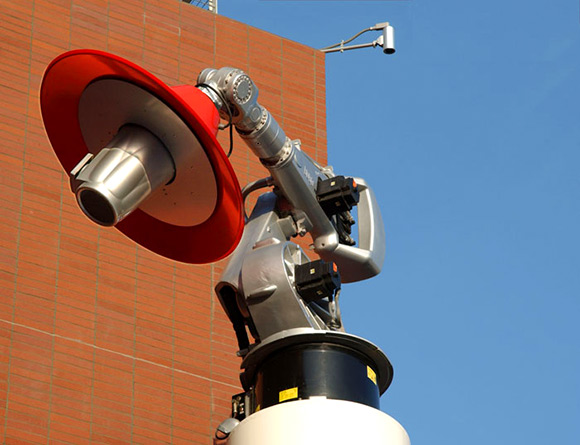
The art of surveillance is a gallery of devices and technologies that either are being used or may someday be used to track people as they go about their daily routines. Some of it is presented as an artistic medium, while other devices are simply upgraded from "evil-looking tools of oppression" to "cute, cuddly-wuddly tools of oppression."


I love this quote: "We see an almost unlimited opportunity for turning the tracking of people into a wonderful experience."

Does that sound nice and ominous to anyone else, or am I just being paranoid?


I see that smile. (and they do too!)

Wednesday, December 12, 2007

Brandon Sanderson to complete The Wheel of Time

If you haven't already heard the news, you can read it on Tor's official website:
http://www.dragonmount.com/News/?p=326

Or on Brandon Sanderson's blog:
http://brandonsanderson.com/blog/585/Brandon-to-Finish-Wheel-of-Time

I think this is incredibly cool. Brandon Sanderson has entirely won me as a fan with has fantasy novels, Elantris, Mistborn, etc, and I can see him pulling off A Memory of Light with the intricacy and flair that will do Robert Jordan's legacy justice. It'll be a tough thing, and I'm sure he knows it, forging ahead with another author's work while trying to take the many fans and their super-high expectations into account.

Seems like we must wait until 2009 to see the final result, but all I can say is that this development ups the chances of the series ending on a satisfactory note that ties the whole mess of story together.


I see that smile.

Tuesday, December 11, 2007

Teeny Ted from Turnip Town is the smallest book around

Now what in the world is that post title supposed to mean?

Apparently some records were broken back in April concerning the tiniest book in existence: Teeny Ted from Turnip Town was created by a group of Canadian researchers using a focused gallium-ion beam to carve out eetsy-beetsy letters on 30 crystalline silicon microtablets, making up the story of Teeny Ted who goes on to win a turnip contest at the annual county fair.
But you won't be curling up by the fireplace to read this harrowing tale, oh no. Instead, you'll be powering up your handy-dandy electron microscope, the only thing powerful enough to bring the infinitesimal pages into focus. You do have one of these lying around the house, right?

For a sense of scale:

The book is 7 nanometers x 10 nanometers in size.

The head of a pin is 2 millimeters across. If there are any angels dancing on it, this must be their favorite book.

Is it art? Is it science? Is it the cutest, teensiest, weensiest thing you've ever seen? I'm not sure about any of those, but it is small.


I see that smile.

Monday, December 10, 2007

What the Hell?

What do you think of when the idea of Hell starts getting talked about? Okay, so not many people start up casual conversations around Hell. It gets thrown around more over the phone as a place where telemarketers are told to go...or maybe you see it in cartoons, with a bunch of naked people wandering through the flames and devils picking their teeth with pitchforks. Or maybe Hell is that place you go if you don't attend church and put 10% in the offering plate when it comes around (though only lip-syncing the hymns can be just as bad).

Where did this idea of Hell come from, and why does it permeate our culture so much? We see it in plenty of mythology and older literature. Greek tales have Hades and Tartarus, especially in lore such as The Odyssey. The Bible talks about it quite a bit, and people are plenty used to the sidewalk prophets warning of various sins that might land you there. From my experience, it is mostly a Christian concept used to denote the consequences of rejecting God in this life. Whatever your beliefs regarding the theology and mythology of Hell, I'm curious about how including this element can affect a story. What factors does it bring into play?

To start with, what are words that pop up in your head when you think "Hell"?

A few come to mind for me...Dark. Fire. Pain. Isolation. Agony for all eternity. A generally un-fun place to experience.

Hell, in other words, is the stick to the carrot of Heaven. It implies a moral code and structure to the universe that says, "If you do this, you are rewarded. If you do this, you are punished." If a story has any sort of Hell/Heaven distinctions, then this involves several further concepts:

1. It implies a supernatural dimension to life.
2. It implies an afterlife.
3. It implies some system that enforces who goes where.

However you fashion the details of this system is up to you. But have you wondered, when creating a world, what happens to the people when they die? Is there anything waiting for them afterwards, and should they be concerned about what it is so there aren't any nasty surprises?

This is all based on the traditional form of Hell. Most people are familiar with Hell in this way, and so we tend to gloss over it whenever we come across it. How, then, can you shake up this idea and make it your own so people might take a second look at your story?

What if...

Hell were a physical location where souls went to after death?
Hell and Heaven switched characteristics and inhabitants for some reason?
To promote efficiency, could there be a business merger between the two?

What other tweaks and questions would you put forward to shape a fresh twist for your story?


I see that smile.

Sunday, December 09, 2007

Clockwork insects

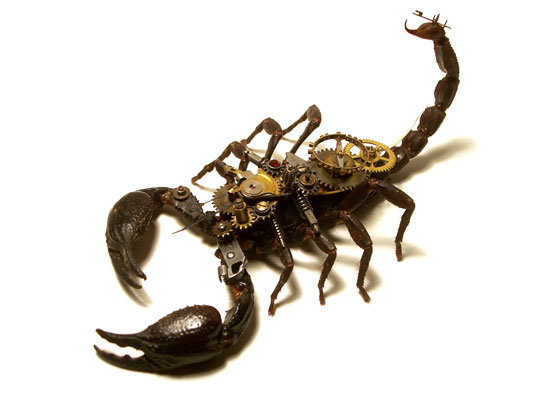
The Insect Lab doesn't make its creatures entirely from scratch. Instead, they take various specimens and...enhance them with artistically applied gears, cogs and wiring to create the illusion of the bug being part watch, part insect. I'm sure some people might be creeped out by these creations, and even I am not too comfortable with the arachnids, but take a look at the Lab's unique collection of altered critters and see if any catch your eye.

Here are my two favorites:


The dragonfly reminds me of our talk a bit back about the possibility of government-manufacture spy devices that mimic insects, buzzing over our heads. Well, if they do get around to making those, hopefully they'll at least look as cool as this.


I see that smile.

Saturday, December 08, 2007

I'd love to see...

...someone write a story where this sort of armor plays a pivotal part in the plot.

http://www.pitbullarmory.com/dog-armor.html

Yes, this can be made to order.

However, I will be insanely envious of anyone who can include this sort of armor in a story, in any way:

http://www.pitbullarmory.com/Squirrel-armor.html

First off, if you have a pet squirrel, let me know. Second, if you can get it to sit still enough to dress it, I'm incredibly impressed. Third, if you can train it to attack people with such a tiny sword, and in full armor, that might turn out to be one of the most cute, yet terrifying things I've ever seen.

I am also going to predict that we'll start seeing YouTube vids of people's armored dogs, cats and squirrels, plus whatever other animals one might be in the mood to strap metal plates to.


I see that smile.

Friday, December 07, 2007

The problem with making too much sense.

There's always a mixture of joy and trepidation when throwing myself into a new story. I tend to spend at least a couple weeks developing a world, with all its magic, characters and plot until I feel comfortable enough to start working steadily on the chapters and scenes. However, because I have such a bulk of information at my fingertips and running through my head, my biggest challenge is avoiding explaining everything right away, or over-expounding on all the intricacies of the world I’ve dreamed up. It’s fun to be in the middle of the world-building process, discovering how things work and why this landmark exists and when this city was founded. But that kind of information, if not crucial to the story, quickly bogs the reader down if it starts popping up in the text. For me, however, the timelines, calendars, religious organizations and economic systems are all really neat stuff that I spent a while lining up, and I want them to have a chance to appear in the story. So I have to hold myself back from going on and on about this person's genealogy and that person's secret contract that might form a betrayal later on.

This is the tough part. Because on my end, everything makes some sort of sense since I can step back and see the story as a whole. But for the reader, if every answer was known as soon as the question appeared in the book, that’d make for a pretty boring adventure. Nothing to discover? Why waste the time? I’ve tried to teach myself to leave trails of dialogue and observations, snippets of scene and action that lead the reader on until something becomes clear through the process of finishing the story. I basically want to tease the reader as much as possible, and hope that the final denouement is satisfying enough that they feel it was worth the effort to understand. But if I have a character look at a building and then give several paragraphs on the particular construction of that building, which is just a nifty thing I came up with and wanted to showcase it…I don’t believe that’s going to be terribly engaging for the reader.

There is a lot of enjoyment to be had, however, in writing a first scene (in very, very rough format, of course) and then coming back to it the next day and thinking, "This has the potential to not suck." That’s a good feeling.


I see that smile.

Thursday, December 06, 2007

It's time to celebrate Pretend To Be A Time Traveler Day!

I'm not sure who exactly came up with this, but apparently a new holiday is on the scene.

Pretend to be a Time Traveler Day.

I think I could get behind this celebration, except for all the paradoxes it might produce. December 8th is the day, and here are the rules and options.

Rule #1- You can't tell anyone that you're a time traveler.

Simple, huh?

There are three time periods that you can pretend to be coming from. A Utopian future, a Dystopian future, and the Past. Each has costume options, and the creators of this unique holiday have provided a few tips for spreading the joy.

For instance, if you come from a Dystopian future, you could:

- Walk up to random people and say "WHAT YEAR IS THIS?" and when they tell you, get quiet and then say "Then there's still time!" and run off.

- Stare at newspaper headlines and look astonished.

- Take some trinket with you (it can be anything really), hand it to some stranger, along with a phone number and say "In thirty years dial this number. You'll know what to do after that." Then slip away.

This might also be a great time to shave your head and get that tattoo you've always wanted. Any other ideas?


I see that smile.

Wednesday, December 05, 2007

Development of belief in the paranormal

Why do we believe in the supernatural? How does this mode of thinking come about in a world that seems to primarily be based on physical experience and observation? What causes that leap from natural to super?

Is it an element of heritage and upbringing? Is the supernatural world simply a birthright that our parents pass down to us, whether through religious beliefs or otherwise? Are we so inundated with urban legends, folk tales and myths that some of the deepest parts of our minds accept them as true?

This article, from the magazine of Skeptical Inquiry, presents a couple of models on the formation of paranormal belief on an individual level, listing sources such as cultural influences, psychological influences, and spiritual influences.

Our culture is a big part of it, especially with modern media, which is super-sensitive to pseudoscientific beliefs...and even when a report is given in a spirit of debunking or ridicule (like UFOs or Bigfoot), those watching might end up believing in the reality of the very phenomenon the reporter is setting out to invalidate in the first place.

Why? At the core, the issue is that of control. We want to believe there is something more powerful than us that is still somehow under our influence...whether through prayer, superstitious rituals or otherwise. We like to believe there is a greater force out there that we can tap into and thus maintain a level of direction in our lives.

We also have an innate desire to make sense out of the world around us. And if there isn't a necessarily scientific explanation for something, then the cause, we rationalize, must lie beyond science.

There is also the element of having a "fantasy outlet." An aspect of belief that, for instance, associates feelings of harmony and peace with seasonal icons like Santa Claus, the Easter Bunny, and Cupid. We know these figures are nothing more than social constructs, yet we associate powerful emotions with them and often let them define entire seasons of the year because they comfort us and provide a sense of nostalgia or connection with our fellow human beings. Even Halloween indulges in the childish, yet fun belief in ghosts, devils, witches and the whole peanut gallery of traditional spooky creatures.

It's interesting to see how these paranormal elements make up such an intimate part of our lives and belief systems. Even when you joke about things like the Tooth Fairy, it taps into basic human greed, and then you've got kids knocking their teeth out because they believe they'll get cash for them. We think, as adults, we grow up and out of this silliness, but do we really? Sure, we know Santa Claus is a fat guy in a red suit, hired for hourly shifts at the mall. When we have kids, we become the Tooth Fairy and hide painted eggs in the yard. But there seems to be a tiny part of even the most cynical of us that continues to approach the world with the perspective that there are still forces or beings hiding around the corner and in the shadows. Do you have some kind of "lucky" item or ritual that you go through to win a poker game or sports event? Do you bargain with spiritual forces so you don't miss your train, or so the day stays sunny and doesn't spoil a picnic?

Can you spot the paranormal and supernatural in your life?


I see that smile.

Tuesday, December 04, 2007

The Supernatural World

I've got a few posts coming up that revolve around the concept of the supernatural, and the origins of some of our beliefs in various paranormal and theological tropes that fall into that realm. In anticipation of this, here's a fun resource that goes beyond just mythology or religion and touches on all aspects of the supernatural realm:

The Supernatural World


It covers all manners of phenomenon, creatures, psychic abilities, paranormal experiences and so on that have inundated our world and, of course, provide countless sources of inspiration for stories...though some considered nonfiction alongside the fiction.


Oddly, I rather liked this one:


Abductee- A human or animal which has been taken without consent by an extraterrestrial life form.


It even lists Quackery-- Integrating metaphysics with sympathetic magic or spiritualism with healing. The term is generally used to describe frauds that dispense useless or harmful treatments to vulnerable people on their deathbeds.


And did you know there is such a thing as Jamais Vu? This is the exact opposite of Deja Vu, where "something is familiar to an individual but they believe it is the first time they have experienced it."


From understanding the true definition of a Haunting to White Noise, this is a nice compilation of the various unexplainables that compose our understanding of supernatural whosits and happenings.


I see that smile.

Monday, December 03, 2007

A further review of Majestrum

You may recall when I gave an initial review of a sample of Matthew Hughes' book, Majestrum, with the motivation of receiving a copy of said title. Well, I did receive the book, I did read the whole thing, and now I'm back to give a better-educated opinion on the story.

I really enjoyed it.

There. Succinct enough? Ah. I see you want a wee bit more insight. Okay.

I'm definitely picking up the second Hengis Hapthorn story, The Spiral Labyrinth. Dry wit is what I love in books, and Hughes provides it in abundance, along with complex characters, great worldbuilding, and a unique premise that, literally, turns reality upside down.

Here's the basic story setup- Henghis Hapthorn is a discriminator (read "private investigator") in a far-future rendition of Earth. When we are introduced to our hero, he is having a discussion with his...well...it was formerly some sort of robotic-AI assistant, which has been transformed into a furry creature of unknown origins by way of magic, which Hapthorn has a wobbly relationship with. Apparently the universe swings through phases of logic/reason and magic/intuition, and the pendulum of time is starting to move back towards the latter, affecting people and events in very odd ways. Along with his transformed assistant, Hapthorn is also dealing with a split personality, in which his intuitive skills have become an entirely different person split off from his reasoning capabilities.

The story begins humbly enough, with Hapthorn taking on an investigation into a gentleman whose attentions toward a certain lady of nobility are undesired by the lady's father. A simple start, but things quickly, yet subtly, roll downhill until Hapthorn is caught up in quite a muddle of ancient conspiracies, galaxy and time-spanning plots, and the whole conflict of logic versus magic.

There are a lot of fun, unique cultures and quirks that make up the worlds we get to visit. For instance, Hapthorn has to wear particular insignia and medallions while interacting with high-level nobility because such visual patterns allow the rulers to realize there is someone of lesser rank interacting with them at all. Otherwise, they just blend into the scenery.

The one negative thing I felt from time to time was that I had somehow missed out on a lot of backstory with this character and his world and I fumbled a bit to catch up at the beginning. The reality is, I had missed out. There are a series of six short stories involving Hapthorn's previous adventures found in the volume The Gist Hunter & Other Stories. While they aren't necessary to read before plunging into the novel, they might give you a firmer base on which to begin this tale. Otherwise, you've got to rely on a bit of the character history that gets fed to you as the plot winds on.

That aside, it's a great science fiction mystery, and I look forward to getting my hand on the most recent Henghis Hapthorn tale, The Spiral Labyrinth. Here's the first chapter of Majestrum if you want a peek at it yourself, but I give it a hearty recommendation.

I see that smile.

Sunday, December 02, 2007

Christmas weather

It finally feels like the holiday season, since we woke up to this:
Which, of course, required a romp in the nearby park.

I need to be careful, otherwise the puppy will steal this blog away from me and start posting on her eternal playfulness.

So the writing question of the day: How does weather affect your stories? Or does it? Does your novel timeline occur in the span of one, long sunny day? Or maybe if it's a vampire novel, it's one, long gloomy night. Does the weather change around your characters? How does it affect their mood? Do certain plot points revolve around specific weather conditions? A rainy day spoils the conjuring of a fire elemental? Snow or rain covering over footprints and tracks the hero is attempting to follow?

What's the forecast for the chapter?


I see that smile.

Saturday, December 01, 2007

Jim Butcher on story climax

Jim Butcher has resurrected his blog to post this insightful article on bringing a story to its satisfying climax (and yes, he shamelessly uses the sex analogy).

http://jimbutcher.livejournal.com/3447.html

He defines the climax as nothing more than the answer to the Big Question that has been plaguing the protagonist for 400+ pages. Will they survive? Yes/No. Will they save their love interest from the evil clutches of Sir Twirly Mustache? Yes/No.

Of course, all the details of how this comes about tend to be more interesting than the whole Yes/No checkbox, but if you boil it down to the core, that's what you're left with. Either this happens, or that happens. (Though the writer can be tricky and make the read think This has happened, when the Plot Twist comes into play and they realize That actually happened instead.)

Reading Butcher's article got me wondering--when you start writing your story, is the climax something you plan out from the beginning, or do you let it surprise you as much as the reader? Do you know how the hero is going to escape the super-kaboom, auto-destruct sequence despite the rabid flying sea monkeys chasing him while his sidekick is lobbing off one-liners? Or does the whole

I tend to approach the story with the climax already envisioned in some rough form. It's like a mental anchor that lets me pull myself along until I reach that scene.

I like how Butcher breaks down he dramatic elements that compose a climax.

ISOLATION
CONFRONTATION
DARK MOMENT
CHOICE
DRAMATIC REVERSAL
RESOLUTION

I do think these elements play toward his particular writing and storytelling style, and that no writer would portray the same scenes in the same way...but these are still some good guideposts in trying to craft that plot culmination with as much drama and energy as possible.

Whenever I approach a new idea to flesh it out into a novel plot, I usually make a rough outline of "Three crisis and a resolution." Three nasty disasters/setbacks that hit the protagonist as they pursue the ultimate goal, until finally, something happens and they get it right. I like to see my characters get to the end of their resources until right before the end. So a story might have a bunch of mini-climaxes in it, but it's that final one that wraps up all the big questions and lets the protag walk into the sunset...or not.

How do you handle your climaxes? Do you have specific themes or scene elements that you try to thread throughout it, or do you mix everything up and hope for a big explosion?


I see that smile.